Lifecycle · Phase 3 of 8

Plan: decide what comes first, and what can wait

Planning turns a validated opportunity into clear priorities, sequencing and success measures. With 85 templates, it is the largest phase in Gensudo’s library, reflecting the role every team member plays in planning.

Get StartedExplore all 382 templates
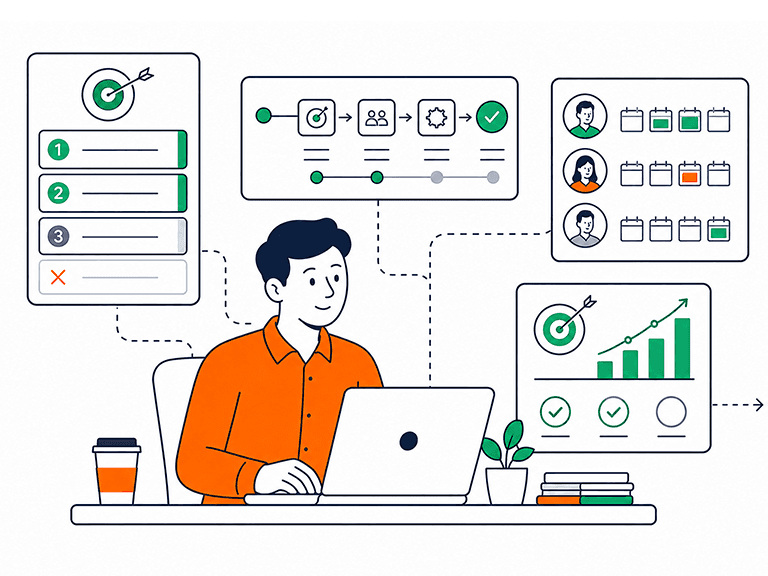
A man sat at a laptop working through the plan phase; making decisions regarding priorities, roadmap, resourcing and success measures.

What Planning is

Planning turns a validated opportunity into a clear commitment. It defines what the team will prioritise, what it will not pursue, how work will be sequenced and how success will be measured. The decisions made here, including priorities, roadmap, resourcing and success measures, shape every phase that follows.

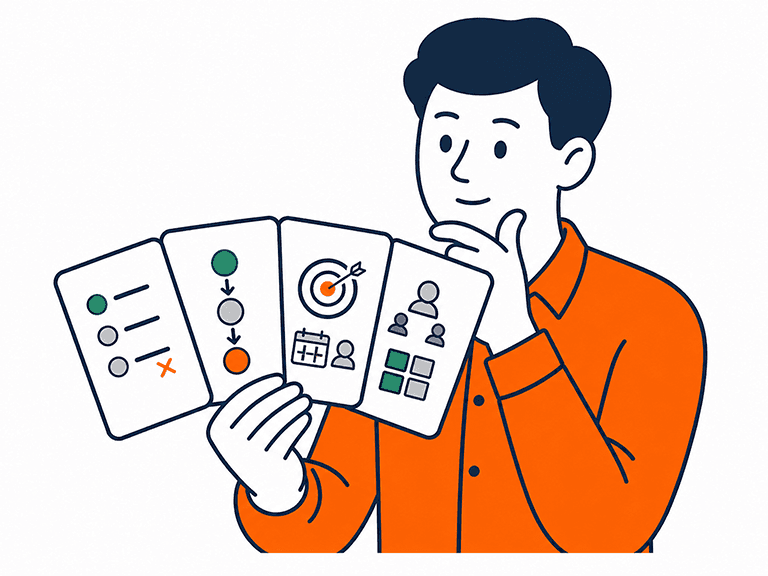
A man holding cards deciding what comes first, the order of work, how success will be measured, and who owns each.

What gets decided in Plan

By the end of Planning, the team should be clear on:

  • What comes first, and what has deliberately been deprioritised
  • The order of work and the dependencies between each stage
  • How success will be measured, by when and by whom
  • Who owns each area of work and what resources are available
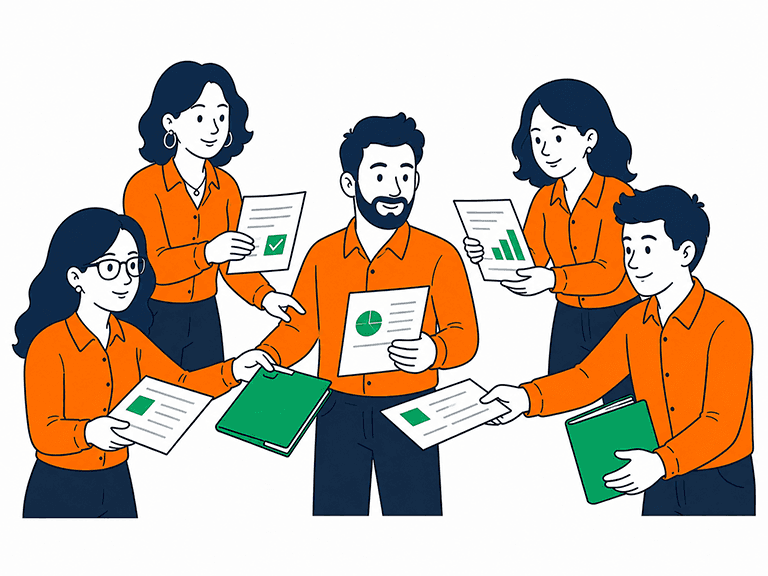
Five product leads reviewing plan phase documents which include clear guidance on why it matters, what good looks like and who needs to approve it

The documents in the Plan phase

Gensudo includes 85 planning templates across five product roles, making Plan the largest phase in the library. Every role contributes, led by the Head of Product with 21 templates, followed by the Product Manager with 19, Creative Director with 17, Product Director with 15 and Product Owner with 13. Key documents include the Product Vision Statement, OKR Alignment Document, RICE Scoring Sheet and Product Roadmap. Each template includes clear guidance on why it matters, what good looks like and who needs to approve it, helping teams create planning documents that are ready to guide action, not simply be completed.

A typical Plan sequence

  1. 1

    Anchor the direction

    Restate where this product is going and why, in a Product Vision Statement, and connect it to the organisation's objectives through OKR alignment. Priorities argued without an anchor never stay argued.

  2. 2

    Score the options honestly

    Put candidate work through a consistent lens — a RICE Scoring Sheet or similar — so that prioritisation is visible reasoning rather than the loudest voice.

  3. 3

    Sequence into a roadmap

    Order the work by value and dependency, not by who asked first. A decision-grade roadmap shows why things sit where they do.

  4. 4

    Define the success measures

    For each objective, write down the measure, the target and the read date — before the work starts, while nobody has anything to defend.

  5. 5

    Secure real sign-off

    Walk stakeholders through the plan and the trade-offs inside it. Sign-off means they saw what was declined, not just what was chosen.

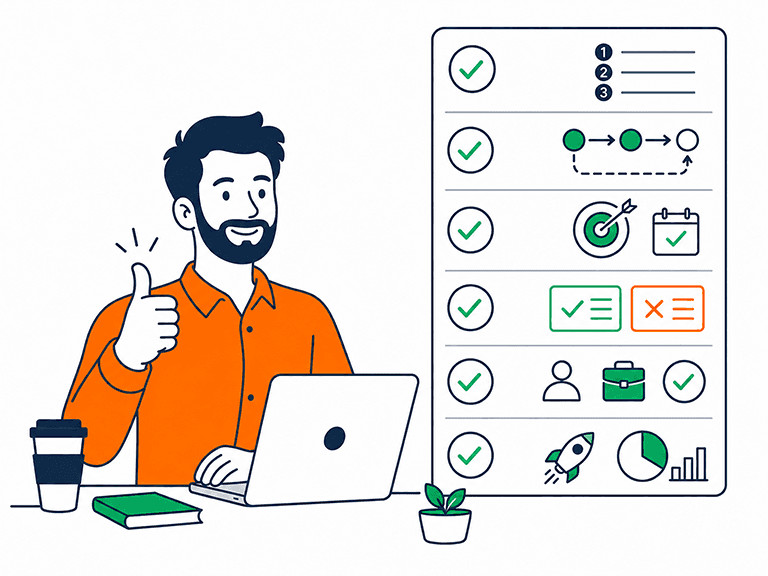
A man at a laptop ready to move on from the plan phase as his priorities are clearly ranked, roadmap shows the order, every objective has a measurable definition of success and more

You’re ready to move on from Plan when:

  • Priorities are clearly ranked and supported by agreed reasoning
  • The roadmap shows the order of work and key dependencies, not just dates
  • Every objective has a measurable definition of success and a clear review date
  • What is not being prioritised is recorded alongside what is
  • Ownership, resources and approvals are agreed and documented
  • Success measures are clear enough to assess properly after launch

Plan phase questions

Why is Plan the biggest phase in the library?

Because every role plans. Of Gensudo's 382 templates, 85 sit in the Plan phase — the Head of Product alone has 21 planning documents, and even the lightest role carries 13. Vision, objectives, prioritisation, roadmaps and resourcing all have to be written down somewhere, and each role sees planning from a different altitude, so the documents genuinely differ rather than duplicate.

How do I prioritise between competing features?

Use a consistent, visible scoring method — a RICE Scoring Sheet is the classic — so every candidate is judged on the same dimensions and the reasoning survives the meeting. The score isn't the decision; it's the starting position that forces disagreements to be about evidence rather than volume. Gensudo's quality scorecard specifically checks for scored matrices because they're what separates a ranked plan from a list.

What makes a roadmap decision-grade?

A decision-grade roadmap shows its working: why items sit in this order, what each depends on, what was declined and what success will be measured by. A list of features with quarters attached is a communication artefact, not a decision artefact. The test is whether someone outside the team could read it and understand not just what's coming, but why.

How often should the plan change?

The plan should change whenever the evidence does — that's not a failure of planning, it's the point of writing measures down. What shouldn't change silently is the record: when priorities move, the reasoning moves with them. Later phases, particularly Optimise, exist to feed real performance back into exactly this document.
Keep moving

Back: Validate

A plan is only as strong as the evidence beneath it. If priorities feel arbitrary, the validation case may need another look.

Revisit the Validate phase

Next: Define

With priorities set, the top of the roadmap needs specifying - exactly what gets built, precisely enough to build it.

Go to the Define phase

Plan with your reasoning on the page

Roadmaps, OKRs and scoring sheets with guidance built in - and AI drafting that proposes, cites and always leaves the judgement with you.

Get Started