For Creative Directors
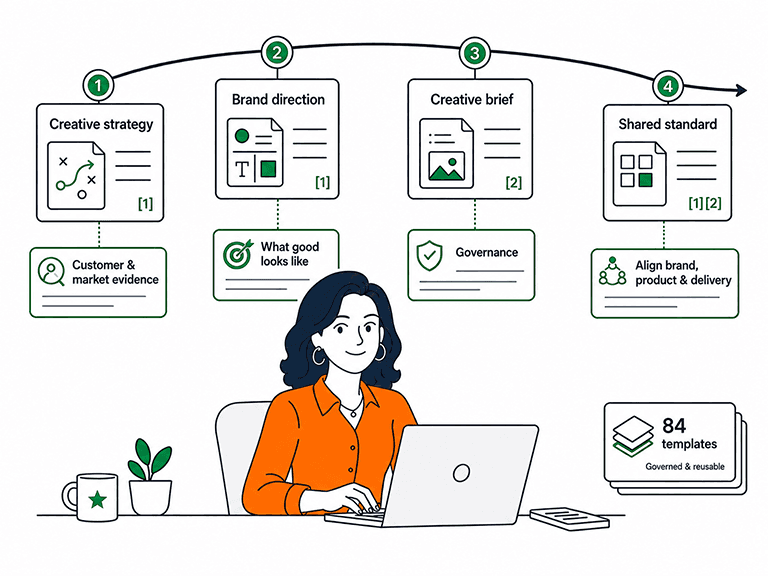
In a product room, taste alone gets outvoted by a spreadsheet. Gensudo gives Creative Directors 84 governed templates - the largest set of any role - so creative strategy and brand decisions arrive documented, cited and hard to dismiss.

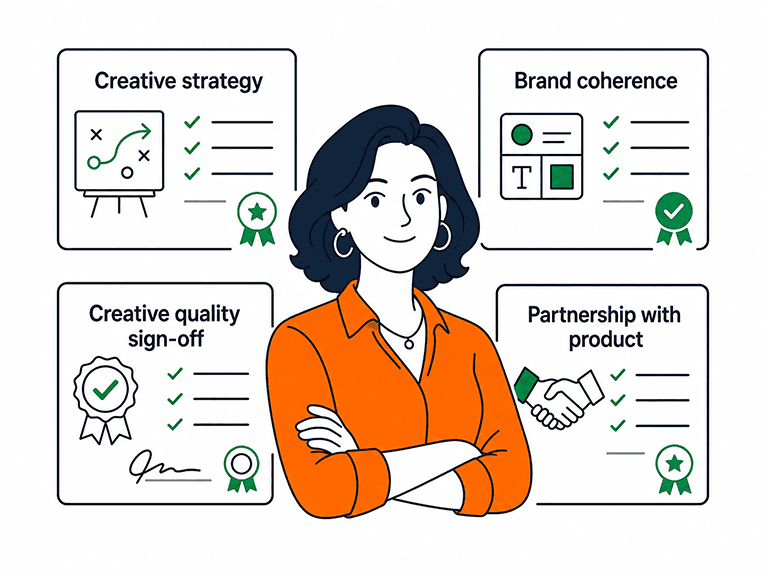
A Creative Director holds two things at once: the creative strategy that gives a product its point of view, and the brand coherence that keeps every touchpoint feeling like it came from the same place. Both are easy to assert and hard to defend unless they are clearly documented.

Gensudo gives Creative Directors the largest template set of any role - 84 governed documents spanning creative strategy, brand and the full product lifecycle - with a dedicated AI drafting persona and research that grounds creative direction in customer and market evidence rather than opinion alone. Gensudo treats creative documentation with the same rigour as product documentation: the same governance, the same guidance on what good looks like, and the same evidence discipline. The result is a clearer, more defensible creative function that can align brand, product and delivery around one shared standard.
Creative Directors get 84 governed templates in Gensudo - more than any other role - with the weight in Discover, at 15 templates, and Plan, at 17. Good creative direction is front-loaded: understand deeply, decide deliberately, then defend the coherence of what ships.
The raw material of creative judgement. The Persona Document, the Jobs-to-be-Done Analysis and the Competitive Analysis tell you who you are designing for and what everyone else sounds like.
CD discover templates →Testing the appetite before committing the craft: the Demand Validation Report and the Opportunity Assessment put numbers under a creative hunch.
CD validate templates →The largest phase for this role. The Product Vision Statement and the OKR Alignment Document are where creative strategy stops being a mood and becomes a direction others can follow.
CD plan templates →The craft documents themselves: the Creative Brief and the Tone of Voice Guidelines, written precisely enough that work produced without you still sounds like you.
CD define templates →Coherence under pressure. The Brand Guidelines and the Customer Journey Map keep every screen, string and state on-brand while the product takes shape at build speed.
CD build templates →The Product Launch Checklist anchors readiness, with a final pass on the Tone of Voice Guidelines before anything customer-facing goes out the door.
CD launch templates →Creative direction is not fire-and-forget: a refreshed Market Research Report or a Product-Market Fit Assessment show whether the brand is still landing with the people it was built for.
CD optimise templates →Endings deserve craft too. The Product Sunset Assessment and the Product Retirement Business Case close a product with the same intentionality it launched with.
CD scale or sunset templates →Drafting that keeps your voice, an editor that holds your work to a bar, and evidence that puts customers behind creative calls.
Creative Director is one of five roles with its own AI drafting persona. Full drafts are charged once, per-section Improve preserves your facts and phrasing choices, and everything arrives as a suggestion — accepted or rejected by you, never applied silently.
AI document drafting →The paid editorial review reads a document across six dimensions — repetition, right-sizing, citation coverage, scored matrices, counter-evidence and evidence mix — and each finding carries an Apply action that re-drafts exactly that section. Advisory, always; the final call is yours.
Editorial review →The shared research pool includes customer jobs-to-be-done and competitor intel among its six categories, cached per project and bundled at no credit cost. Creative decisions grounded in cited customer evidence are far harder to argue away.
Evidence and research →No — Creative Director is one of Gensudo's five roles, alongside Head of Product, Product Director, Product Manager and Product Owner, and it actually has the largest template set at 84. The role gets its own AI drafting persona and its own role-by-phase slice of the governed library.
Yes. The library includes creative and brand templates such as the Creative Brief, Brand Guidelines and Tone of Voice Guidelines, each carrying the same governance as every other document: why it matters now, sign-off requirements, what good looks like, and per-section prompts as you write.
The drafting persona is tuned to the Creative Director role, and per-section Improve refines while preserving your facts and figures — it works with what you have written, not over it. More importantly, every draft is a suggestion you accept or reject: AI supports your creative judgement, it does not replace it, and unreviewed output is never final.
Through the project's shared research pool, which spans six categories including customer jobs-to-be-done, competitor intel and market sizing. Findings must carry a usable source URL or they are dropped, you can add your own first-party facts, and documents cite their sources inline — so a tone or positioning choice can point at the customer evidence behind it.
Gensudo team plans are priced per seat. Team Standard costs £25 per person per month and includes shared projects, collaboration and structured review workflows. Team Premium costs £59 per person per month and provides a higher AI credit allowance for teams with heavier usage. Your total monthly cost depends on the number of team members you invite.
84 governed templates, a Creative Director drafting persona and customer research on tap.