Stop writing on instinct. Build every document on evidence you can check.

Each Gensudo project carries a shared, web-grounded evidence pool — competitor intel, market sizing, benchmarks and more — where every finding must show its source, and your own facts sit alongside as first-party evidence.

Get StartedHow citations carry into documents
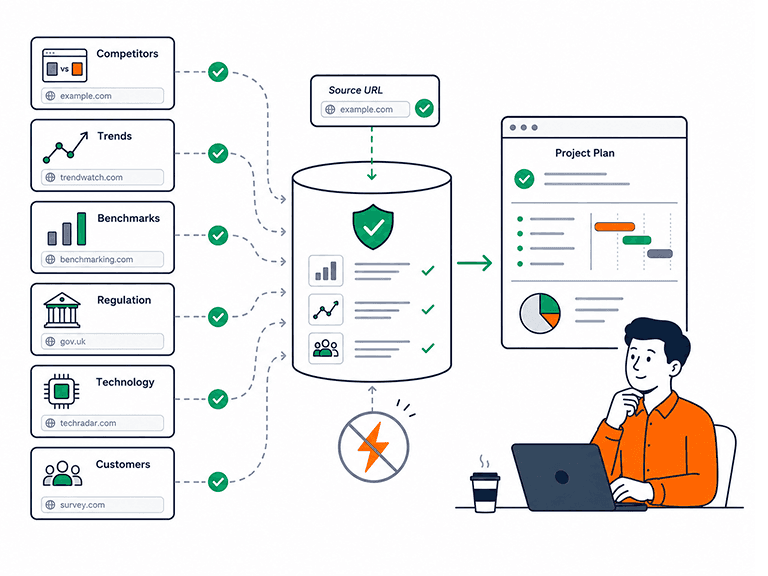
Competitor, trend, benchmark, regulation, technology and customer research feeding a verified evidence pool and a project plan

Research built into every project

Every Gensudo project includes a shared evidence pool, bringing together web-grounded research across six areas: competitors, market trends, benchmarks, regulation, technology and customer needs. Research is included within your plan and never uses credits. Findings are only retained when they can be traced to a usable source URL.

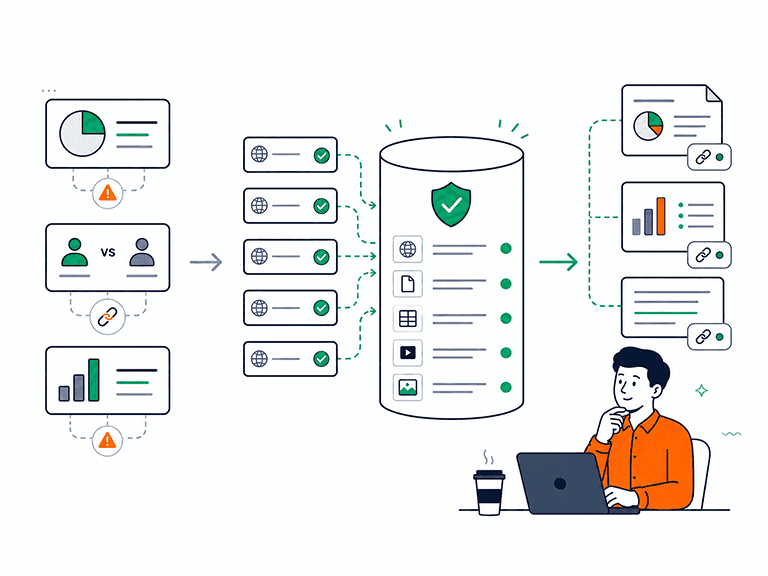
Unsourced charts and comparisons flagged, then checked against a source list and linked back to citations in the final documents

Why claims lose their sources

Product documents often fail review because their claims cannot be verified. Market figures have no origin, competitor comparisons rely on memory and benchmarks are repeated without evidence. Gathering sources properly takes time, so it is often skipped. Gensudo completes that research once per project, keeps the supporting evidence and makes it available throughout your work.

How the evidence pool works

  1. 1

    Research runs once per project, per category

    Web-grounded research gathers findings across the six categories your project needs. Results are cached for around 30 days, shared by every document in the project, and bundled — it never costs you credits.

  2. 2

    Findings without sources never make it in

    A finding is only kept if it carries a usable source URL. Anything the research cannot trace to a source is dropped before you ever see it — the pool holds evidence, not assertions.

  3. 3

    Add what you know first-hand

    Add-a-fact lets you contribute your own data — usage numbers, customer quotes, internal decisions. Your facts are treated as first-party evidence and stand alongside researched findings.

  4. 4

    Verify sources and set canonical values

    Open a source, confirm it says what the finding claims, and mark it verified. Where one metric matters — market size, say — label a canonical value so every document grounds on the same number.

  5. 5

    See where sources disagree

    When two sources give conflicting values for the same thing, Gensudo surfaces the conflict rather than quietly picking a side. You decide which figure your documents should stand on.

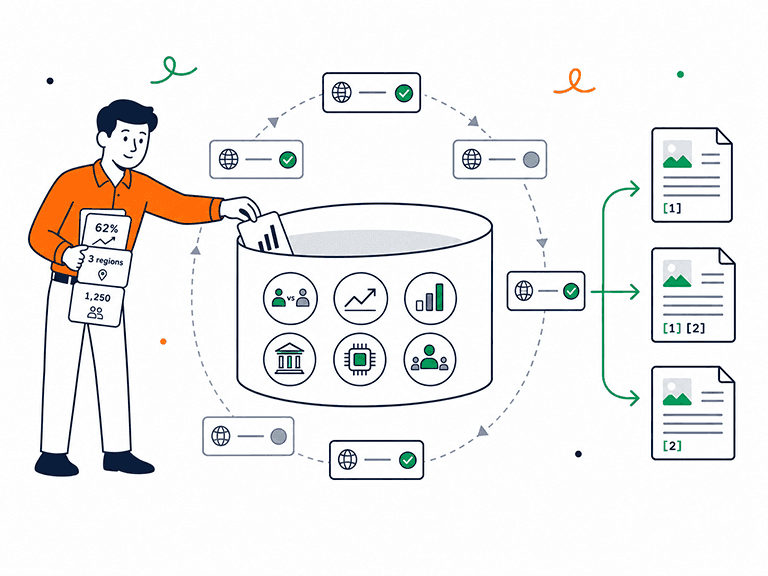
A product lead adding their own figures to the shared evidence pool while researched sources are verified around it

First-party facts and a working verify loop

The pool is not read-only. Add-a-fact captures what only your team knows and treats it as first-party evidence, while the verify loop lets you walk each researched source, confirm it, and build confidence deliberately — one source at a time, at your own pace.

  • Facts you add are first-party evidence, ranked accordingly
  • Verify a source once and every document citing it benefits
  • Verification is always optional — unverified stays neutral, never a penalty
  • Six categories cover the questions product documents actually raise
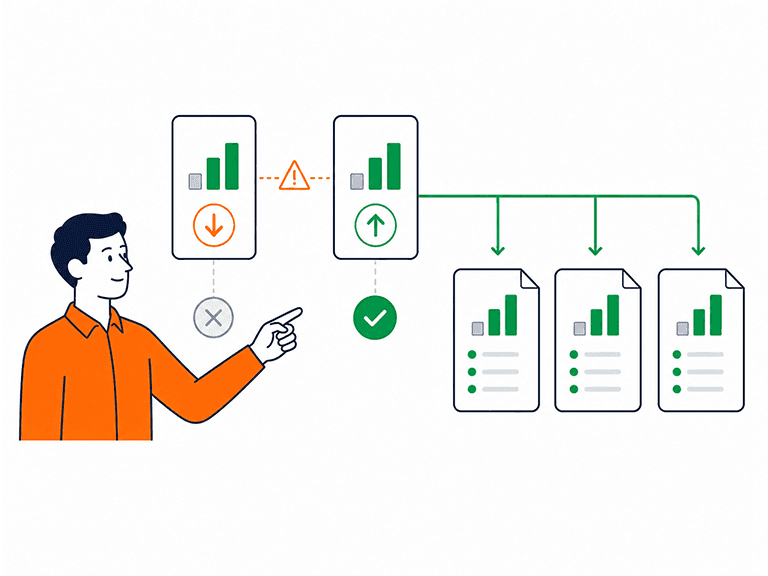
Two conflicting figures flagged, one chosen as the agreed value and applied consistently across three documents

Canonical values and conflict detection keep documents consistent

Sources disagree - that is the nature of secondary research. Gensudo detects when findings conflict on the same metric and shows you the disagreement. Label the value you stand behind as canonical, and drafting grounds on it across every document in the project.

  • Conflicting values for the same metric are flagged, not hidden
  • A labelled canonical value becomes the number your drafts use
  • The pool is shared project-wide, so documents stop contradicting each other

Controls and honest limits

Research in Gensudo is generous by design and honest about what secondary sources can and cannot promise.

Bundled, not metered

Research never costs credits — it runs once per project per category and is cached for around 30 days. Your credits are for drafting and review, not for finding out what is true.

Compare plans

Sources, or nothing

Every finding must carry a usable source URL or it is dropped. But a source is a starting point for your judgement, not proof — verification and interpretation remain yours.

What it will not do

The pool will not resolve conflicts for you, invent figures where sources are silent, or substitute for primary research with your own customers during discovery.

Evidence in the Discover phase

Questions about research and evidence

Does research use up my AI credits?

No. Research is bundled with your plan and never costs credits. It runs once per project per category, is cached for around 30 days, and is shared by every document in the project — so evidence-gathering never competes with drafting for your credit balance.

Where do the findings come from?

Findings come from web-grounded research across six categories: competitor intel, market sizing and trends, benchmarks and standards, regulatory and compliance, technology and integration, and customer jobs-to-be-done. Every finding must carry a usable source URL; anything untraceable is dropped before it enters the pool.

Can I add evidence the web does not have?

Yes — that is what add-a-fact is for. Internal metrics, customer conversations, decisions already taken: add them to the pool and they are treated as first-party evidence, available to every document in the project alongside researched findings.

What happens when two sources disagree?

Gensudo surfaces the conflict rather than silently choosing a side. You can inspect both sources, then label the value you stand behind as the canonical one for that metric — and drafting across the project grounds on the value you chose.

Is researched evidence guaranteed to be accurate?

No, and Gensudo never claims otherwise. Requiring a source URL makes every finding checkable, not automatically true. The verify loop exists so you can confirm what a source actually says, and AI-drafted claims built on the pool remain subject to your professional judgement before any document is final.
Give your next document a foundation you can defend

Create a free project and watch the evidence pool assemble — sources attached, your facts included, conflicts in the open.

Get Started